

Digital Tools in a BYOAD Science Classroom: Engagement and Performance in Grade VIII
What if your quietest students aren't unmotivated — but simply have no way into the lesson you've designed?
This action research explored whether purposefully sequenced digital tools, introduced one at a time within a BYOAD framework, could shift Grade VIII Science from passive reception to active inquiry — and whether that shift would show up in test scores.
PROBLEM IN
CONTEXT
What the Data Revealed
In a Grade VIII Science classroom, students were showing consistently passive behaviours and heavy reliance on the textbook. Observation recorded limited participation in discussion, low voluntary questioning, and a tendency to treat Science as something to be memorised rather than understood. Assessment results were inconsistent and below expectation, and student feedback pointed to a plain lack of interest in teacher-led lessons.
Baseline observation quantified how narrow participation was: on-task behaviour at 52%, collaborative engagement at 35%, and voluntary questioning at just 28%. Pre-test averages across the four topics to be covered sat at 51%.
Why it Mattered
The pattern had consequences beyond low marks. Students working through memorisation rather than understanding were poorly equipped to apply knowledge to unfamiliar contexts, reason through multi-step problems, or develop the inquiry skills the Science curriculum actually asks for.
The teacher’s diagnosis is the important move here: the issue was not student ability but instructional design. A teacher-centred, resource-poor approach was failing to activate the cognitive, emotional and behavioural dimensions that engagement requires — and it was failing hardest for the quieter students, who had no route into a lesson built around volunteering out loud.
A performance target was established: measurable gains in on-task behaviour, collaboration and voluntary questioning, alongside improvement in test performance across all four Science topics taught during the intervention.
Research Question
How does the use of digital tools in a BYOAD classroom affect Grade VIII students' engagement and academic performance in Science?
INTERVENTION TIMELINE AND ACTIVITIES
Grade VIII Science, mixed ability | Four weeks | 40–50 minute sessions, three to four per week
Risks were planned for, not discovered: offline alternatives were prepared for connectivity failures, device-use rules were established before tools were introduced, and the number of platforms in any single session was deliberately capped to prevent cognitive overload.
FINDINGS AND IMPLICATIONS
The Researcher’s Conclusion: Fewer Tools, Better Chosen
The reflection worth quoting to any department considering BYOAD concerns restraint. The early temptation was to deploy as many platforms as possible for variety. In practice this risked overload and pulled attention away from content. The most effective sessions used a single, purposefully selected tool with clear instructions and enough time to engage deeply. The planning question shifted from which tools can I use? to which tool best serves this objective, at this moment in the lesson?
Limitations acknowledged by the researcher: device and internet inequity persisted throughout, requiring offline backups and strategic pairing so no student was excluded. As a single-classroom study over four weeks with no concurrent control group, some of the improvement may be attributable to teacher enthusiasm, novelty effect, or natural progression across the term. Randomised or matched comparison groups, longer intervention windows and multi-school settings would be needed to establish BYOAD’s specific causal contribution.
If you’re interested to learn more about the intervention, methodology, resources or the results, click on the relevant button below to access the full research report.
Here’s the report podcast if you’re interested.
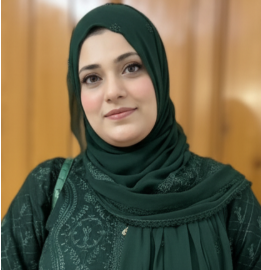
Iqra Suhail
Teacher
Iqra is qualified in Biomedical Sciences, and transitioned into the field of education 16 years ago, driven by her passion for teaching and learning. She began her career as a teacher, nurturing student curiosity and supporting academic growth. Through dedication and leadership, she progressed to the role of Instructional Coach (IC) and later promoted as a Coordinator at Beaconhouse Primary and Middle Campus Faisalabad. She is deeply committed to innovative educational practices and conducted research on improving Class VIII students’ engagement and achievement in Science by integrating digital tools in a BYOAD classroom. She strongly advocates purposeful technology integration to create inclusive, student-centered learning environments.